
What an exciting Saturday!! After months of lab upgrades, our Moore Nanotechnology Systems GPM170 glass-pressing machine is certified and running perfectly! This machine provides excellent, 0.1K temperature stability (our previous machine had 40K temperature swings!). It is also completes a cycle 3x faster, molding a lens in less than an hour! We are getting much higher quality lenses, more reliably – and much faster!

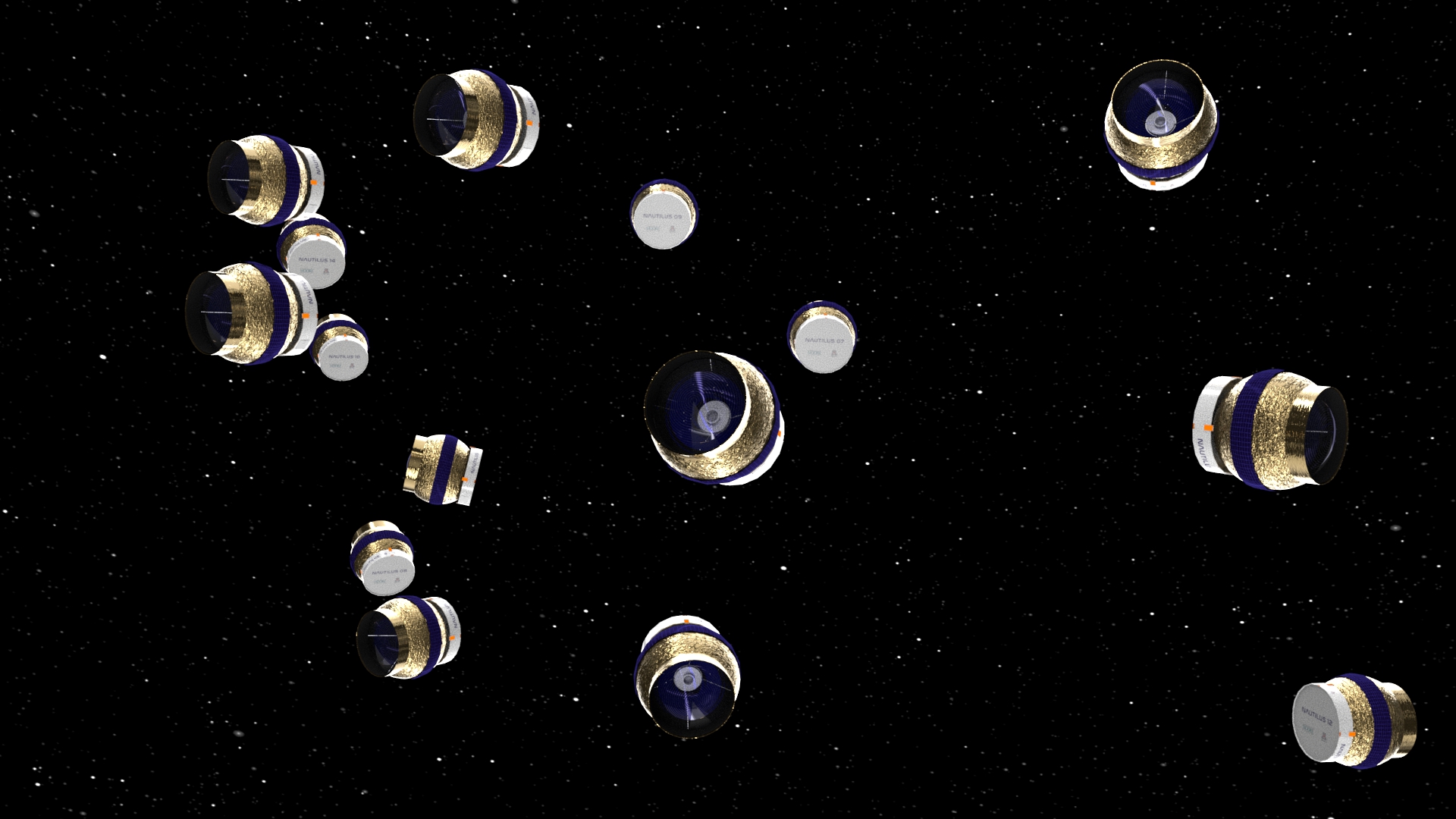
We will use the GPM170 to accelerate the technology development for our Nautilus Space Observatory‘s key technology, the multi-order diffractive engineered (MODE) lenses. Shown are the first press of a lens’ central segment with the new machine. In the next days, we will fine-tune the molding process and build new, segmented diffractive lenses for our ongoing thermal vacuum and vibrational tests. We are on track to demonstrate launch survivability, operation in space-like environment, in high-quality mass production in the next two months.
And, very soon, the lenses pressed here will see starlight – we will test them at the Mt Lemmon Sky Center, near Tucson!
My colleagues on the photo are Nick Brar, Tom Milster, and Youngsik Kim from UArizona Wyant College of Optical Sciences. Many other team members are not on the photo, including Marcos Esparza, who machined the molds interfaces on a Saturday morning.
A big thank you to the Heising-Simons Foundation and Gabriele Betancourt-Martinez, Ph.D. for their commitment to science and generous support of our work!
The lab upgrades would not have been possible without the support of the University of Arizona Space Institute, and support from Dr. Tomas Diaz de la Rubia and Christopher Kopach.
We also thank Dan Goldin, Carmala Garzione, Brian Brandis, Mark Matusko, Drew Lutz, Erika Hamden, Kim Patten, Corey Mustin, Cody Nicholls, and many other University of Arizona colleagues for supporting our project!
