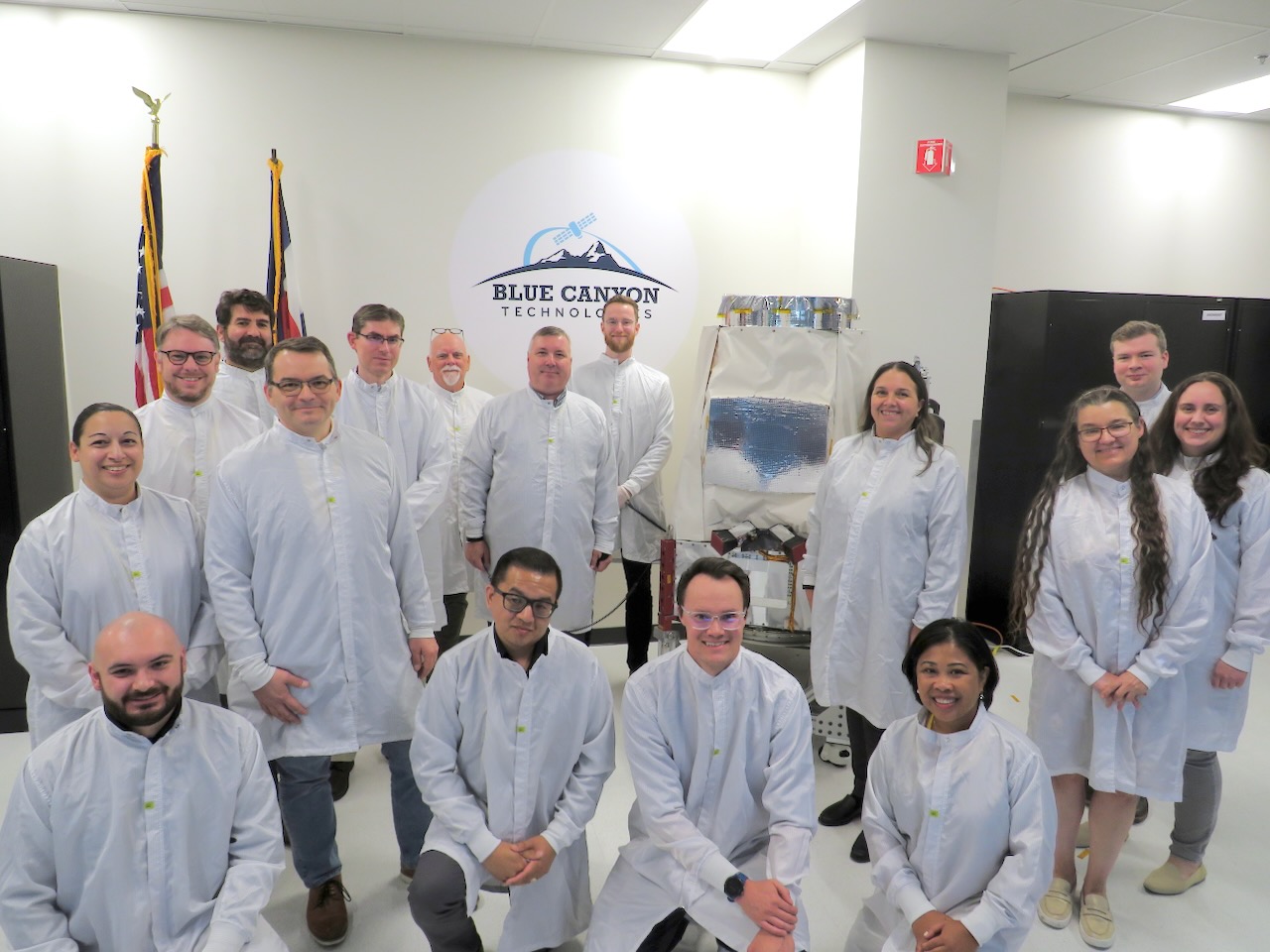
Meeting Pandora for the first time! We recently visited our now-completed spacecraft in the cleanroom of Blue Canyon Technologies in Boulder, Colorado. Next, Pandora will be integrated into a SpaceX Falcon9 rocket for a January 5, 2026 launch from United States Space Force‘s Vandenberg base in California. It is so exciting that after six years of hard work, Pandora is completed and we are moving ahead with launch!

Pandora will use its 0.45m diameter mirror to collect light from transiting exoplanets while also carefully studying their host stars. The telescope was designed to provide the most detailed-yet investigation of how active regions (starspots, faculae, etc.) on exoplanet host stars impacts the transmission spectra of their host planets. Pandora will be able to provide the important extended monitoring and simultaneous visible-infrared observations that its more sensitive big brother JWST does not have time to do.

It has been a real privilege to be part of the this superb team: Colleagues at NASA Goddard Space Flight Center, Lawrence Livermore National Laboratory, Blue Canyon Technologies and University of Arizona (and in many other institutions) have done an exceptional job in designing and building a unique and complex mission – and have done so on a very compressed timeline and on a very lean budget! It was inspiring how the team and partner institutions all pulled together to solve problems and work through challenges. Pandora is an inspiring effort to expand humanity’s understanding of exoplanet atmospheres and to advance the frontiers of space sciences!

The cleanroom provides a controlled, clean environment for the spacecraft’s final integration steps. You will see thin black cables connecting people close to the spacecraft to it. The spacecraft electronics are sensitive to static discharges – by grounding ourselves to the ground points on the spacecraft bus, we could ensure that no sparks fry the tiny electronic brains of Pandora.
It was very exciting to see the spacecraft in person – next time we meet, it will be integrated into a rocket and on its way to leave our planet!
